Each year, the Union of Concerned Scientists honors a small selection of individuals and groups who have taken a stand for science to protect the common good. This year has made it clear just how important this work is. We are honored to introduce the 2020 Science Defenders: bright lights in dark times.
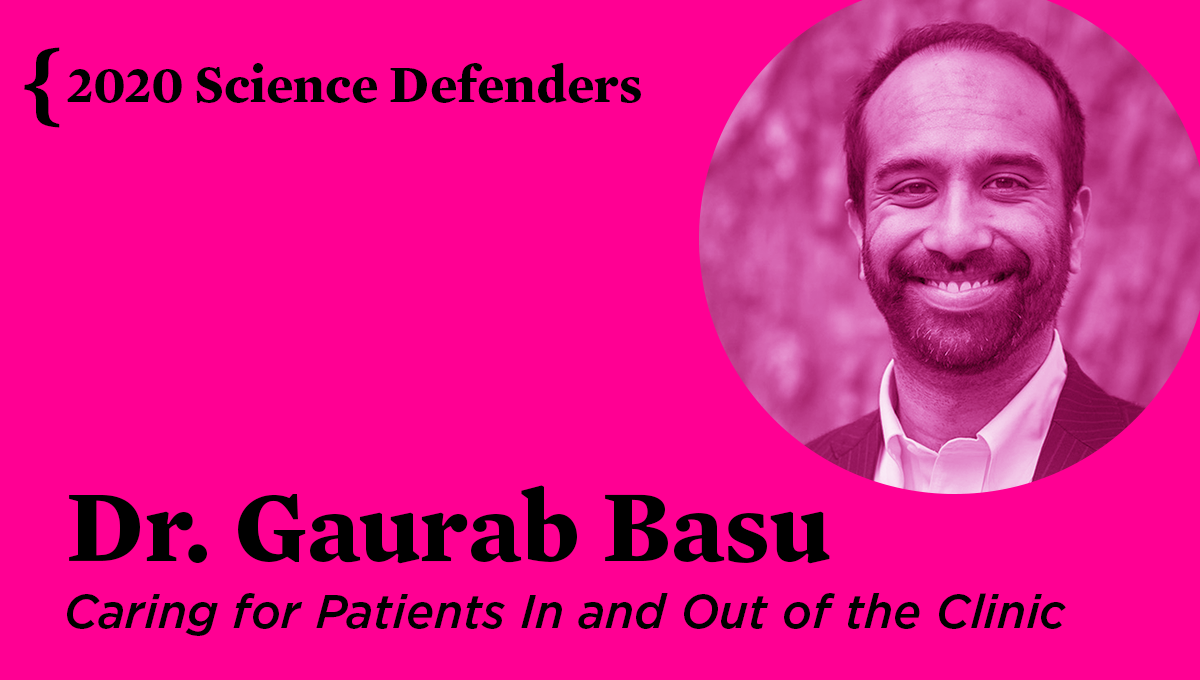
Dr. Gaurab Basu: Caring for Patients In and Out of the Clinic
Dr. Gaurab Basu is a physician whose patients are predominantly people of color,
many of whom are essential workers, living in high-density housing. These
factors put them at a higher risk of COVID-19 infection. “This virus has
activated a lot of these fault lines of injustices,” Basu says. As he watched
the pandemic disproportionately affect those who were struggling the most, he
decided it was not enough just to care for his patients in the clinic—he also
needed to fight the systemic issues that affected their health. Basu put his
medical expertise to work writing
op-eds
addressing these systemic problems, and ensuring that conversations about
COVID-19 also included the related issues of air pollution, racism, poverty, and
climate change. “We need to have fair systems in place that take care of
everyone so that everyone can thrive and be healthy,” he says.
Basu has always worked to make
sure that everyone is cared for equally, regardless of their identity or
circumstances. “When you're a clinician, you see the ways that people are
struggling. We know that poverty, injustice, racism, and climate change are
impacting our patients,” he explains. “But traditionally, we haven't been taught
how to speak up about it.” As co-director of the Center for Health Equity,
Education and Advocacy at the Cambridge Health Alliance, he’s working to change
that. The Center educates other clinicians on how broad systemic issues affect
their patients and encourages them to engage in advocacy. “We need to be a part
of speaking up,” he says. “Scientists and clinicians have to be leaders in our
society, to make sure that science creates a society in which we care for one
another.”
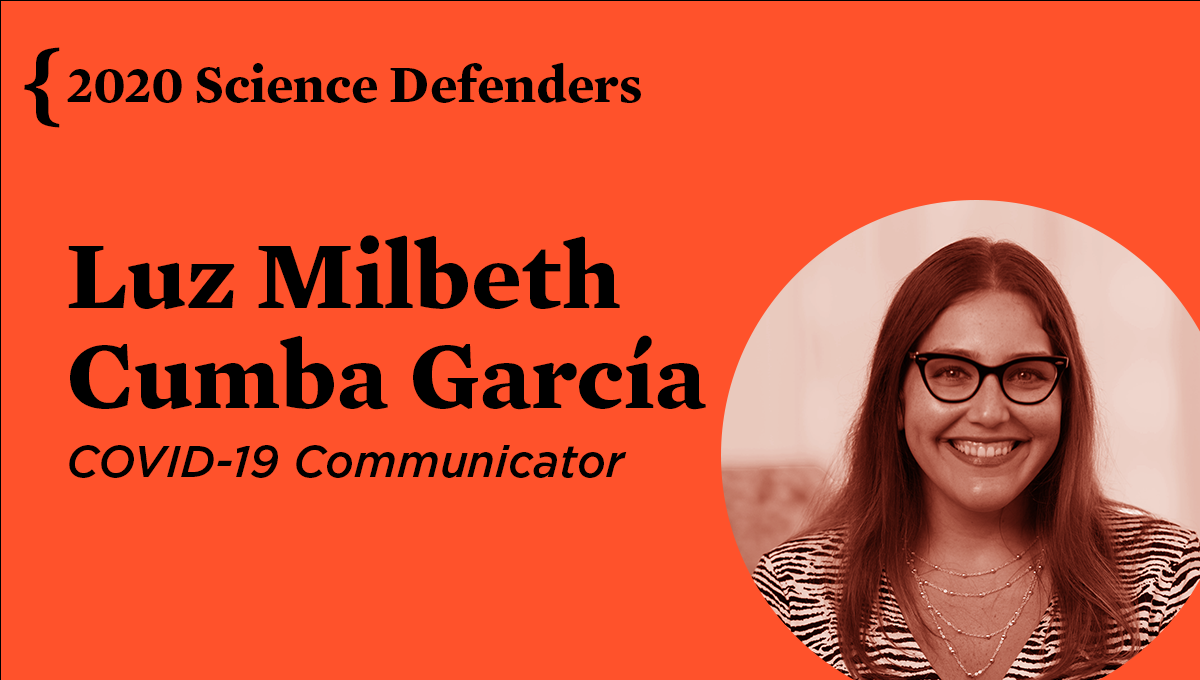
Luz Milbeth Cumba García: COVID-19 Communicator
When COVID-19 arrived in Puerto Rico, disinformation and inaccurate claims about
the virus also began spreading, as was the case in the mainland United States.
To help dispel rumors and communicate vital, potentially life-saving information
about the pandemic, science advocacy organization Ciencia Puerto Rico called on
their network of scientists. From Minnesota, where she is a PhD candidate in
immunology at the Mayo Clinic Graduate School of Biomedical Sciences, Luz
Milbeth Cumba García responded to that call, and has been volunteering her time
and expertise since March. Through webinars, blogs and news
stories,
Q&A sessions on social media platforms, and appearances on radio shows and
podcasts, Cumba García translates information about COVID-19 for people on the
island—not just from English to Spanish, but from medical jargon to
understandable language.
“To deliver clear messages, you need to consider all types of people, their
level of education, their background,” Cumba
García
says. “I think gaining people’s trust is one of the most important steps to
spreading knowledge. I speak Spanish with the same accent. I use culturally
relevant examples and analogies.” Her commitment to speaking plainly has paid
off: thousands of people have read her articles, participated in webinars where
they could ask her direct questions about COVID-19, and listened to her speak
about how to avoid transmission.
“I'm just passionate about communication, and helping my people in every way I
can,” she says. “The majority of my family and friends are in Puerto Rico. I
feel an obligation to do something.”
Cumba García and other Puerto Rico-affiliated science communicators will share
an exhibit documenting their
COVID-19 outreach at the National Museum of American History and the Smithsonian
Latino Center.
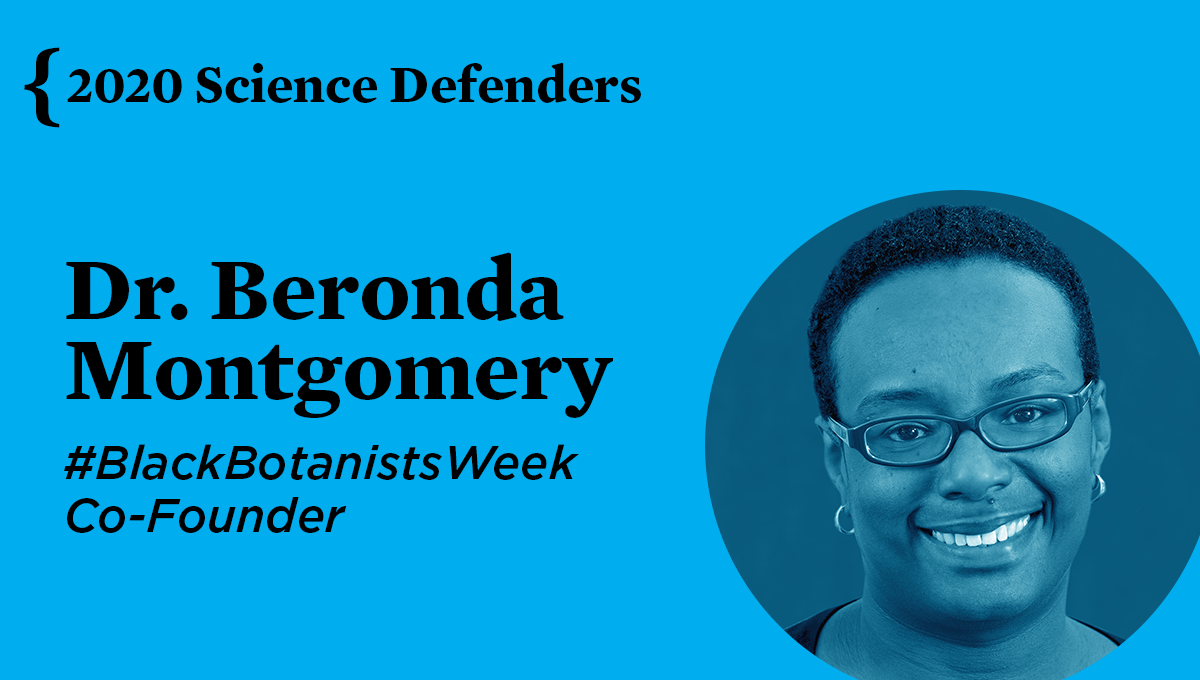
Dr. Beronda Montgomery: #BlackBotanistsWeek Co-Founder
This summer, a wave of solidarity and celebration of Black scientists and STEM
enthusiasts swept over Twitter and other platforms. In reaction to the viral
video of a white woman endangering the safety of a Black birdwatcher in Central
Park, and tapping into mass outrage over police brutality against Black people,
hashtag campaigns launched to connect Black scientists, and to demonstrate the
range and breadth of Black people doing formal and informal research in STEM
fields.
“Social media has the power to bring together individuals historically
underrepresented in academia, who may find themselves one of the few in their
environment,” says Dr. Beronda Montgomery, a
professor at
Michigan State University and co-organizer of the campaign #BlackBotanistsWeek.
“We organized #BlackBotanistsWeek wanting to reach out to academia, and more
broadly, Black people who love plants. And it took off in ways we couldn’t
imagine.” Hundreds of people engaged with
#BlackBotanistsWeek
on Twitter, held July 6-11, to share their stories and learn about others’
research interests. Moved by its success, the organizers are collaborating on a
yearlong lecture
series and a
newsletter for participants and supporters.
“These weeks have been important for Black scientists to organize ourselves,”
says Montgomery, “and discuss issues particular to our disciplines. But beyond
that, it shone a light on how many Black scientists—and Black people interested
in science—there are in the United States and around the world.” The visibility
social media campaigns offer, she says, is good for Black people seeking role
models in their disciplines, and for non-Black people to understand the
diversity of people in STEM. “There’s an abundance of interest, curiosity,
creativity, and enthusiasm among Black scientists,” she says. “Often, we hear
that diversity hasn't made greater strides, because we can't find diverse
scientists. [Campaigns like this] have really challenged that notion. Black
scientists are out there.”
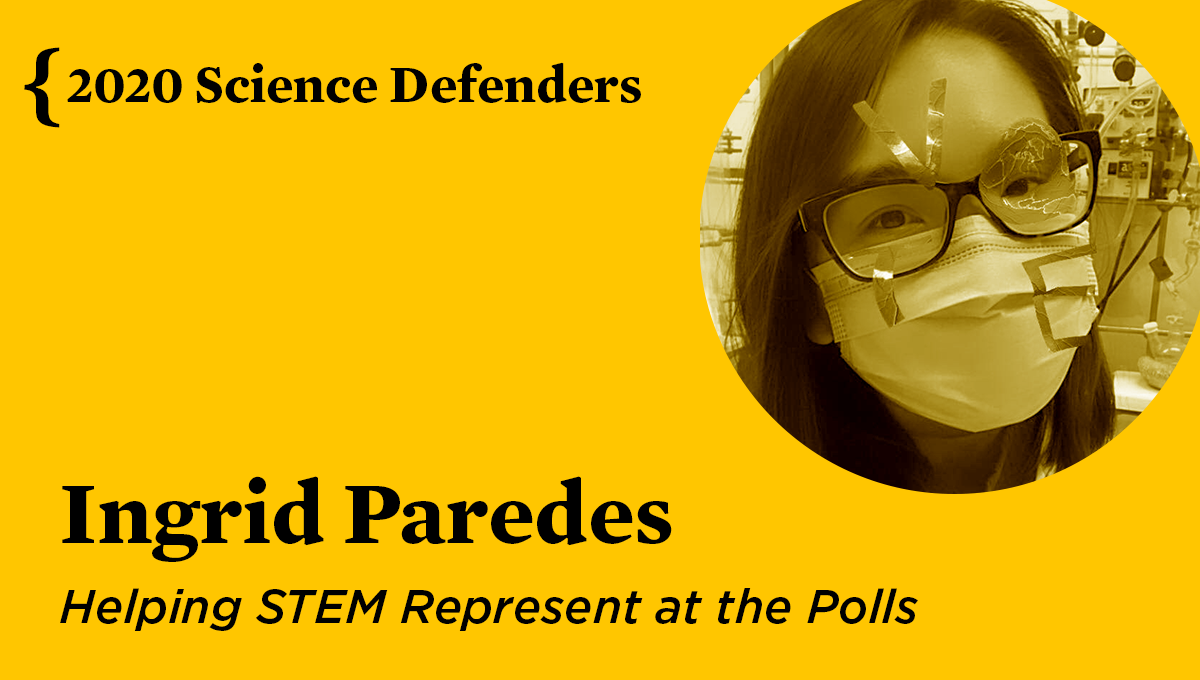
Ingrid Paredes: Helping STEM Represent at the Polls
Students majoring in STEM fields are less likely to vote in elections than
students of other majors, and also less likely to get involved in public service
or other civic engagement, says Ingrid Paredes, a PhD student in chemical
engineering at the NYU Tandon School of Engineering. She was among their
number—until participating in the 2017 March for Science sparked her
interest
in making her voice heard. “It was a really formative experience for me,” she
says, “to see so many scientists from my university committed to standing up for
our field, and to say that being in science isn’t just about doing lab work, but
advocating for science and the scientific community.” After that, she and her
fellow marchers decided they wanted to harness that energy into something
longer-lived than a one-day event. They launched the March for Science
NYC, a volunteer science-policy organization
now in its third year.
Scientists have a crucial role in our democracy, she says. “Those of us in STEM
can use the skills we’ve been taught,” she says, “to read critically, to propose
and test solutions—and apply them to issues like the economy, education, and
immigration, and others that affect our lives.”
This year, Paredes and her team with the March for Science NYC worked to get out
the STEM vote for the 2020 election, to get more people registered and committed
to vote, and to inform people about the issues at play locally and nationally.
“We did this by hosting public conversations to bridge the worlds of academia
and activism, and to show how we can use science to help out our communities,”
she says. “We wanted to give people a primer on the state of policy in these
issues. Science is always on the ballot.”
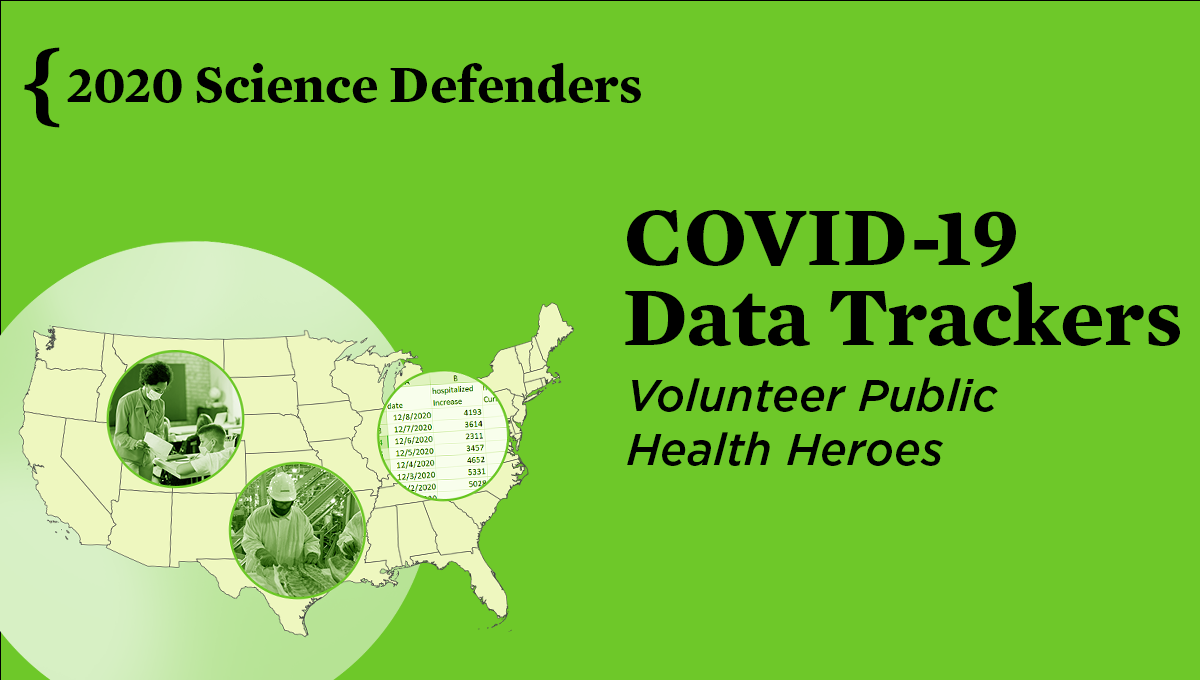
COVID Data Collectors: Volunteer Public Health Heroes
A teacher in
Kansas
who channeled her fears about school re-openings into a spreadsheet tracking
local COVID-19 cases, picked up by the National Education
Association
to report nationwide infections in schools. A public health
official
in Florida who was fired from her job for not manipulating data in the COVID-19
dashboard
tool
she created. A
student
who created a database for infections at
schools, journalists who stepped up to monitor
COVID-19 infection statistics, a professor who surveyed
workers
about safety measures at meatpacking plants. In the absence of consistent
federal, state, local, or corporate leadership to accurately and reliably track
COVID-19 infections, concerned people across the country began collecting,
analyzing, and sharing this data themselves. Their efforts helped establish a
record of the pandemic that can inform public health decisions—and likely kept
countless people safe.
For Dr. Athena Ramos, a professor at the University of Nebraska Medical Center,
reaching out to workers to find out the truth about safety measures at
meatpacking and other food-processing facilities was a natural extension of her
job. “My team has been working with agri-food system workers for years,” she
says. She says that workers in meatpacking plants, many of whom are
undocumented, are often reticent to share information for fear of retribution.
But when she sent out a survey to learn more about workplace protections, she
received more than 600 responses.
“They really wanted to share their stories, so that sharing those experiences
could create change,” she says. “What we learned was that the safety measures
that are most effective are the ones least frequently reported.” Ramos brought
these stories and statistics to the media, contributing to the narrative against
meatpacking plant owners’ insistence that their operations are safe. “In
Nebraska there's a coalition advocating on behalf of workers and it's using the
data to try to push legislative change,” she says. “This kind of organizing is
critical to shift the conversation about prevention, about health promotion, and
about true caring for our communities.”