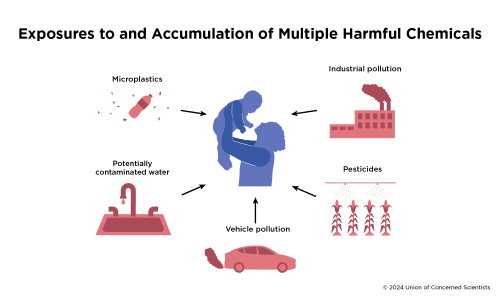
Across the United States, health and environmental policies do too little to protect people and communities from harmful chemicals and pollution in the real world. One key reason is that the nation's environmental laws and rules consider each chemical or facility in isolation, but no one is exposed to one chemical at a time from one source at a time.
The real world exposes all of us to a multitude of harmful chemicals and through a number of pathways—from products we use in our homes and workplaces, to facilities in our neighborhoods that actively pollute the air and water, to legacy pollution that has accumulated in our community’s water, soil, and food chains. Those exposures combine with health stressors that systemic racism and unjust public policies often intensify: barriers to getting good food, existing health conditions, and poor access to health care.
Research and advocacy by environmental justice (EJ) leaders and experts are driving a new approach to regulating chemical and pollution exposures. Pushed by local and statewide organizers seeking to reduce real-world harms in overburdened communities, cities and states are enacting laws and regulations that assess and reduce what are known as “cumulative impacts.” Federal agencies, similarly propelled by advocates, are beginning to acknowledge past regulatory gaps and incorporate language that assesses and addresses cumulative impacts into new rules and policy guidance.
The Guide is a resource to help community, statewide, and national organizing, research, and campaigns drive changes that protect us from cumulative chemical and pollution harms—especially in disproportionately impacted and overburdened communities.
On this topic
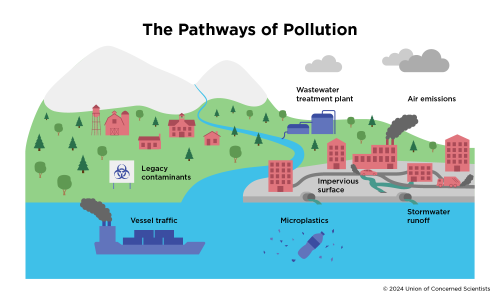
Pathways of Pollution
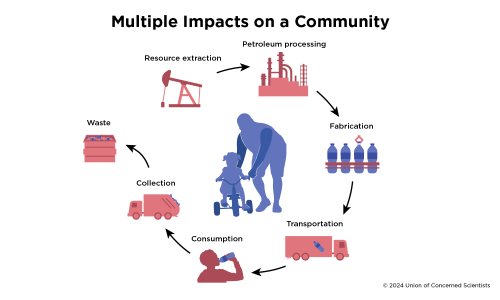
Multiple Impacts on a Community