Ethylene oxide, a colorless gas known to cause cancer, is emitted by facilities that sterilize medical equipment and dried food products as well as by some chemical plants, posing a largely invisible and unrecognized threat to nearby communities.
This UCS analysis finds that two types of facilities emitting ethylene oxide are disproportionately polluting communities of color, low-income communities, and non-English language speaking communities. In addition, more than one quarter of commercial sterilizers are located in "hotspots" where nearby residents are potentially exposed to ethylene oxide emissions from more than one facility—often without their knowledge. It's a potentially dangerous situation that demands action.
You can read the report here, examine the hotspots in more detail, and also use our interactive map to find out more about the facilities emitting ethylene oxide near you.
Our activist resource page offers more information about how you can take action to urge the EPA to better protect the public from ethylene oxide emissions at commercial sterilizers and other EtO-emitting facilities by improving monitoring, reporting, and enforcement.
On this topic
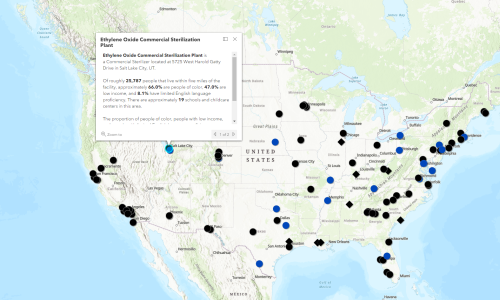
Interactive Map: EtO Facilities
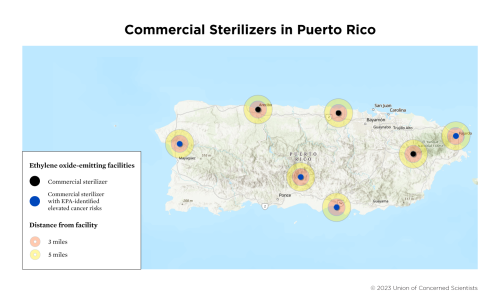
Puerto Rico
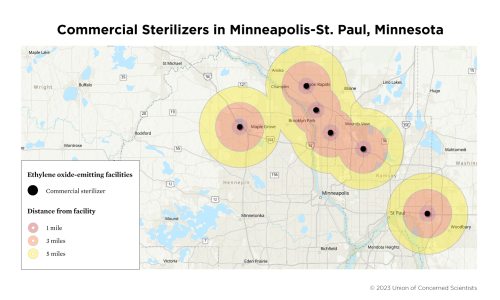
Minnesota
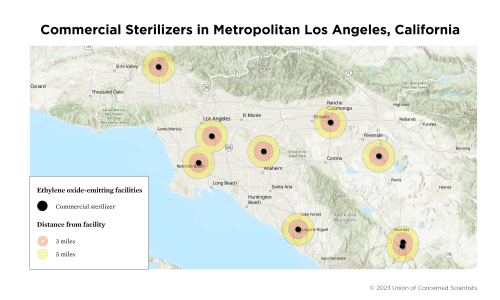
California
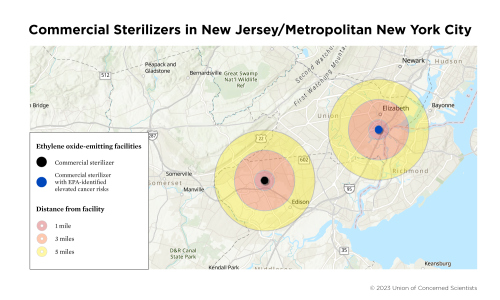
New Jersey
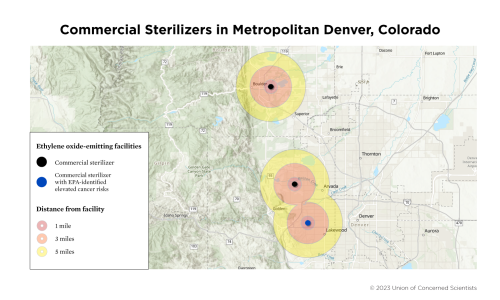
Colorado
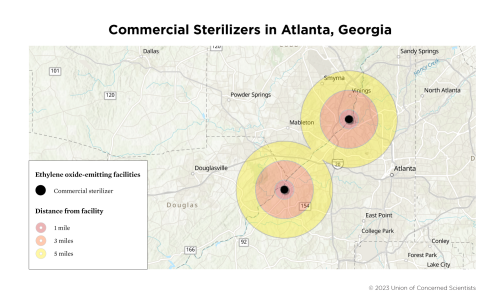
Georgia
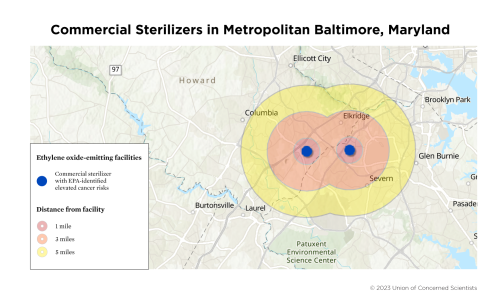
Maryland
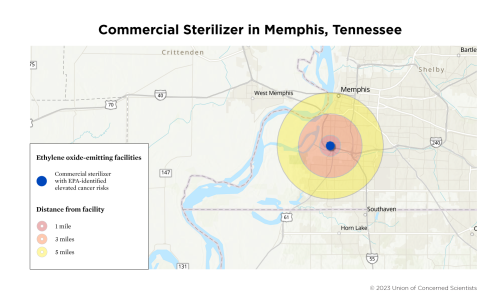
Memphis, Tennessee
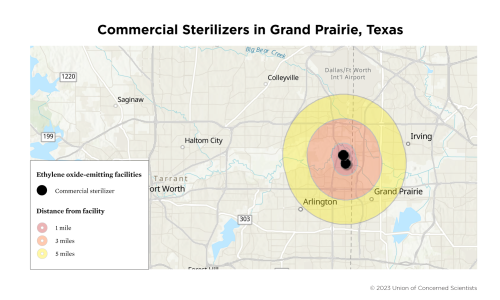
Texas
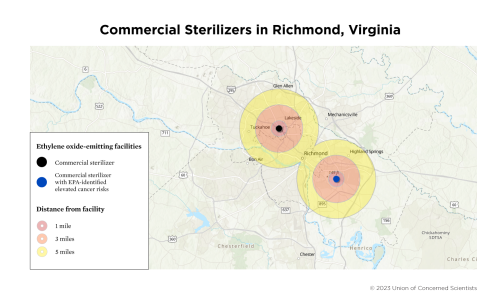
Virginia
Downloads
Citation
Darya Minovi. 2023. Invisible Threat, Inequitable Impact: Communities Impacted by Cancer-Causing Ethylene Oxide Pollution. Cambridge, MA: Union of Concerned Scientists. https://www.ucsusa.org/resources/invisible-threat-inequitable-impact/