Table of contents
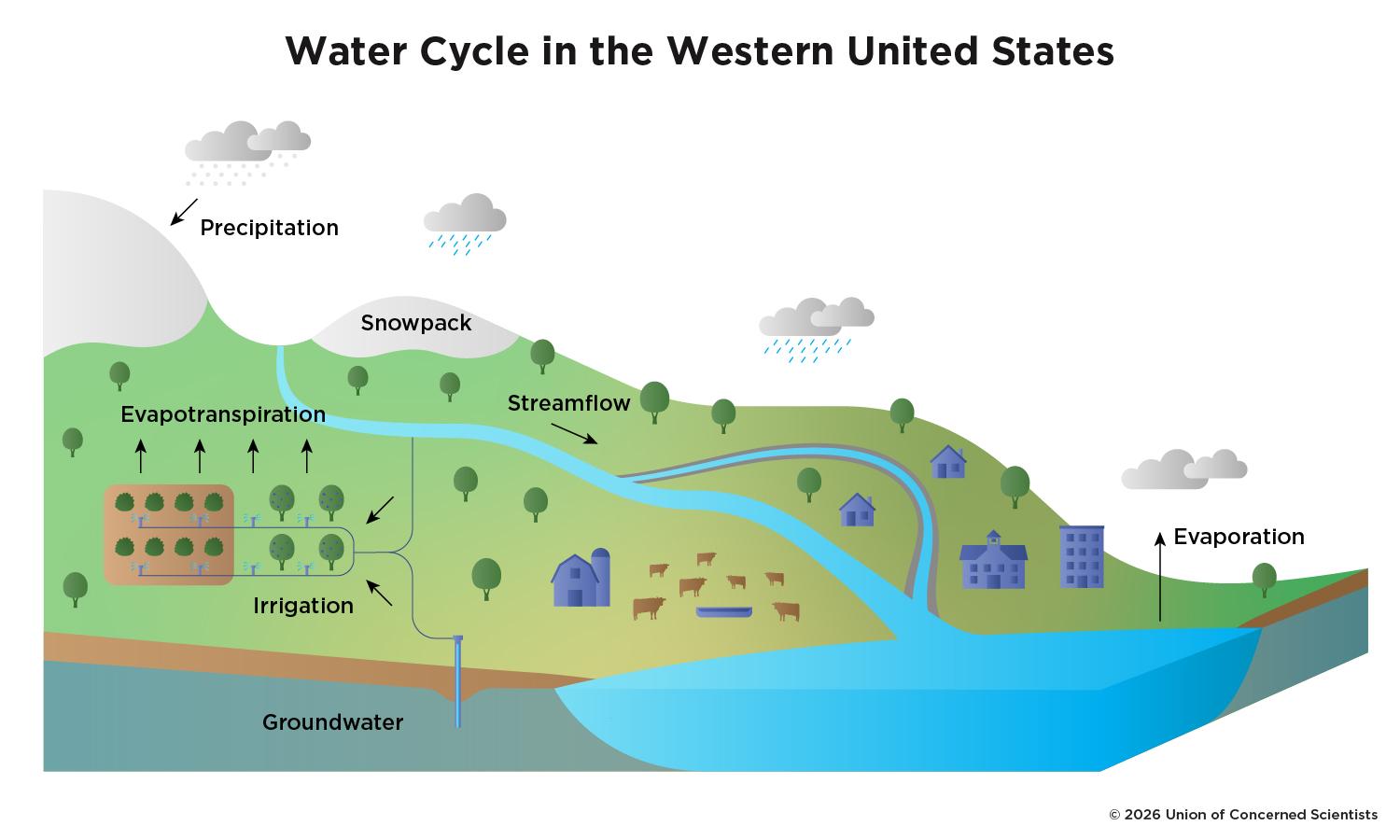
Water scarcity has long been a defining feature of the western United States. Its dry climate and the high water demand from the region’s multibillion-dollar agricultural industry have created an unsustainable water system (Figure 1). Climate change is compounding this crisis by simultaneously reducing supply and increasing demand (Figure 2). The consequences span escalating legal battles over water rights, threats to agricultural economies, reduced hydroelectric power generation, ecosystem collapse, and multiple public health issues, including poor air quality and loss of access to drinking water.
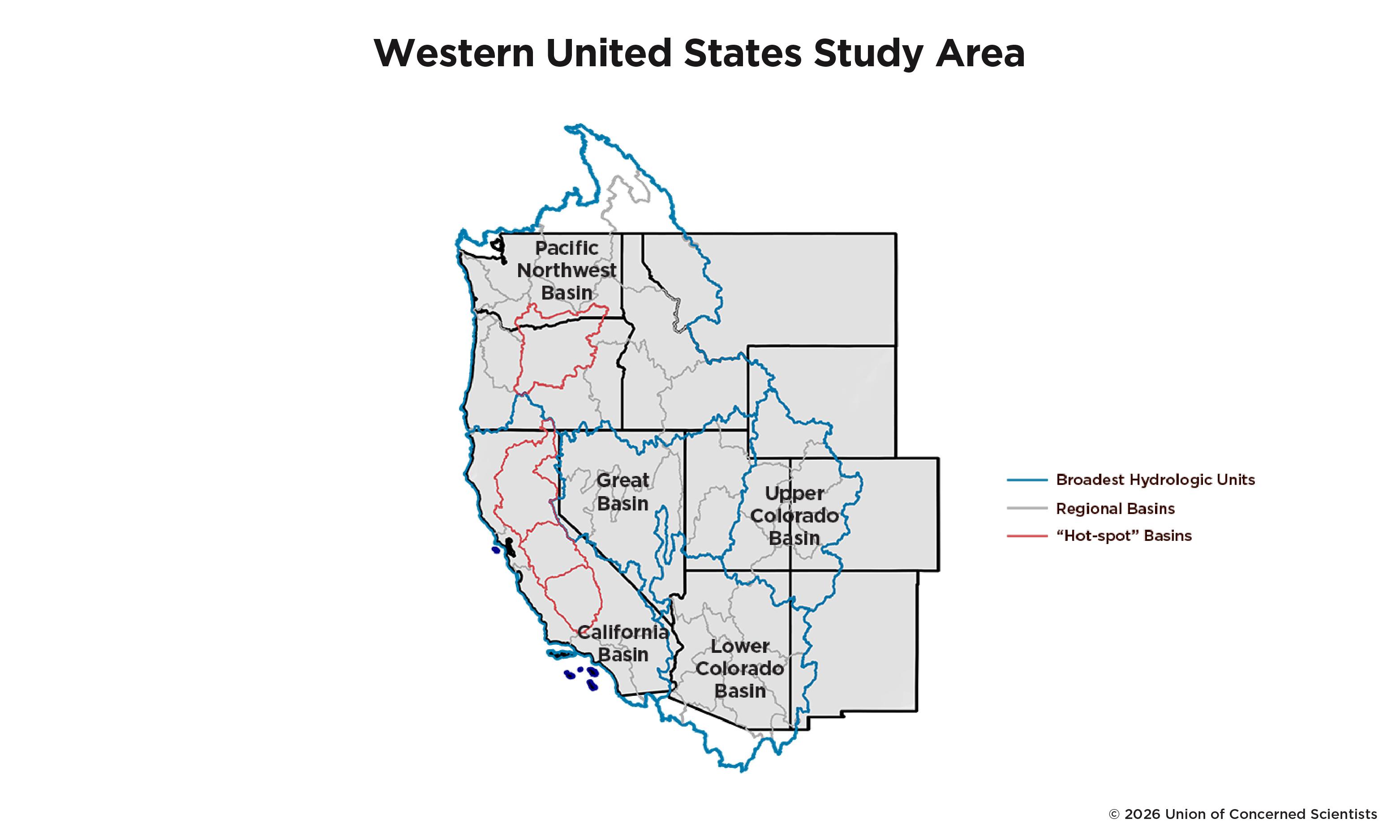
These dramatic changes raise questions of responsibility and accountability related to climate change and its harms, an idea being explored by scientists, attorneys, and policymakers. While nation-states are at the center of this debate in international negotiations, corporations have become the focus of state, county, and Tribal government legal action. These actions align with previous practice, as corporations have historically been held accountable for the damages caused by their products, like tobacco, pesticides, and asbestos.
By 1959, some fossil fuel companies knew of the climate risks their products posed (Franta 2018). Rather than share this knowledge with the public, plan an energy transition, and adapt to projected impacts, these companies and their trade groups engaged in coordinated disinformation and deception campaigns to protect their profits (Merner et al. 2025). Due to their outsize contributions of carbon to the atmosphere and their decades-long deception concerning climate change, fossil fuel companies should face accountability for their climate harms.
This analysis by the Union of Concerned Scientists (UCS) and the University of California, Merced, uses observational data and climate modeling to quantify how emissions traced since 1950 to the Carbon Majors (including companies like BP, Chevron, ExxonMobil, and Shell) have contributed to disruptions in the water cycle across the western United States (E. L. Williams et al. 2026). Our findings show that human-caused climate change has reduced April snowpack by roughly 36 percent, decreased warm season streamflow by approximately 13 percent, and increased irrigation demand by 4.3 percent. Roughly half of these impacts are attributable to emissions traced to the Carbon Majors since 1950, translating to a nearly 15 percent reduction in snowpack, a 6.1 percent decrease in streamflow, and a 2.4 percent increase in irrigation demand.
The combined impact of these changes is particularly acute in agricultural regions, which depend on water for food production. Two such regions are the Central Valley in California and the Middle Columbia River Basin in Washington and Oregon. In California’s Central Valley, human-caused climate change accounts for 20 percent of observed groundwater loss, and roughly half of that—10 percent of the total—is attributable to emissions from the Carbon Majors. In addition, this research illustrates that the timing of water flows is changing substantially due to these emissions. For instance, the midpoint of streamflow now occurs between 5 and 30 days earlier in basins across the region.
Water Cycle Woes
Water resources in the western United States are inherently constrained by a seasonal mismatch in supply and demand. Precipitation, as both rain and snow, regulates supply, whereas evaporation and irrigation drive demand (Figure 2). Most precipitation falls in the winter and is stored as snow, contributing to more than 50 percent of surface runoff in the spring and summer months (Li et al. 2017; Qin et al. 2020). During this warm season, demand is highest due to greater evapotranspiration (evaporation from soil and surface water plus transpiration from plants) driven by warmer temperatures as well as increasing agricultural water use for crop irrigation and industrial farming operations.
Despite engineered systems that store and transport water, like dams and canals, demand often exceeds supply (Dettinger, Udall, and Georgakakos 2015; Grantham and Viers 2014; Slaughter et al. 2010). In the Colorado River Basin, for example, water demand has consistently outpaced supply since the early 2000s (Wheeler et al. 2022; Womble et al. 2025), and in the San Joaquin Valley, a critical agricultural region in California, surface water allocation exceeds 100 percent of available supply (Grantham and Viers 2014). To fill this gap, groundwater has been rapidly depleted (Liu et al. 2022), leading thousands of wells to go dry (Jasechko and Perrone 2020; Perrone and Jasechko 2017; Rodríguez-Flores et al. 2023) and reducing overall resilience across the region (Fernandez-Bou et al. 2021).
On top of historically unsustainable water use, observed changes to water supply and demand highlight how climate change may further disrupt water resources. On the supply side, warmer temperatures have resulted in both earlier snowmelt (Dudley et al. 2017) and reduced snowpack (Gottlieb and Mankin 2024; Mote et al. 2018), leading to smaller amounts of runoff earlier in the season (Xiao, Udall, and Lettenmaier 2018). On the demand side, the region already experiences elevated rates of water loss from plants, soil, and bodies of water during spring and summer months (Albano et al. 2022), leading to greater irrigation demand and groundwater extraction to maintain agricultural productivity (Moyers et al. 2024; E. L. Williams and Abatzoglou 2025). Together, agricultural demand, groundwater overdraft, and climate change have precipitated a water crisis across the region.
Research Findings
Our findings demonstrate that emissions traced to the Carbon Majors since 1950 have substantially reduced water availability and increased agricultural demand across the western United States, accounting for roughly half (~40–64 percent) of the impacts of human-caused climate change (see Figure 3). The consequences of these emissions translate to a 15 percent annual reduction in April snowpack (typically the peak of total snow accumulation), or more than 28 million acre-feet of water—a volume roughly equivalent to the maximum capacity of Lake Mead, the largest reservoir in the United States by volume. Similarly, we found an annual reduction of roughly 12 million acre-feet in warm season streamflow attributable to Carbon Majors’ emissions, which is approximately the combined volume of California’s four largest reservoirs. Interestingly, our results also show an increase in annual October-to-March streamflow attributable to the Carbon Majors, accounting for more than half of the annual reduction during the warm season.
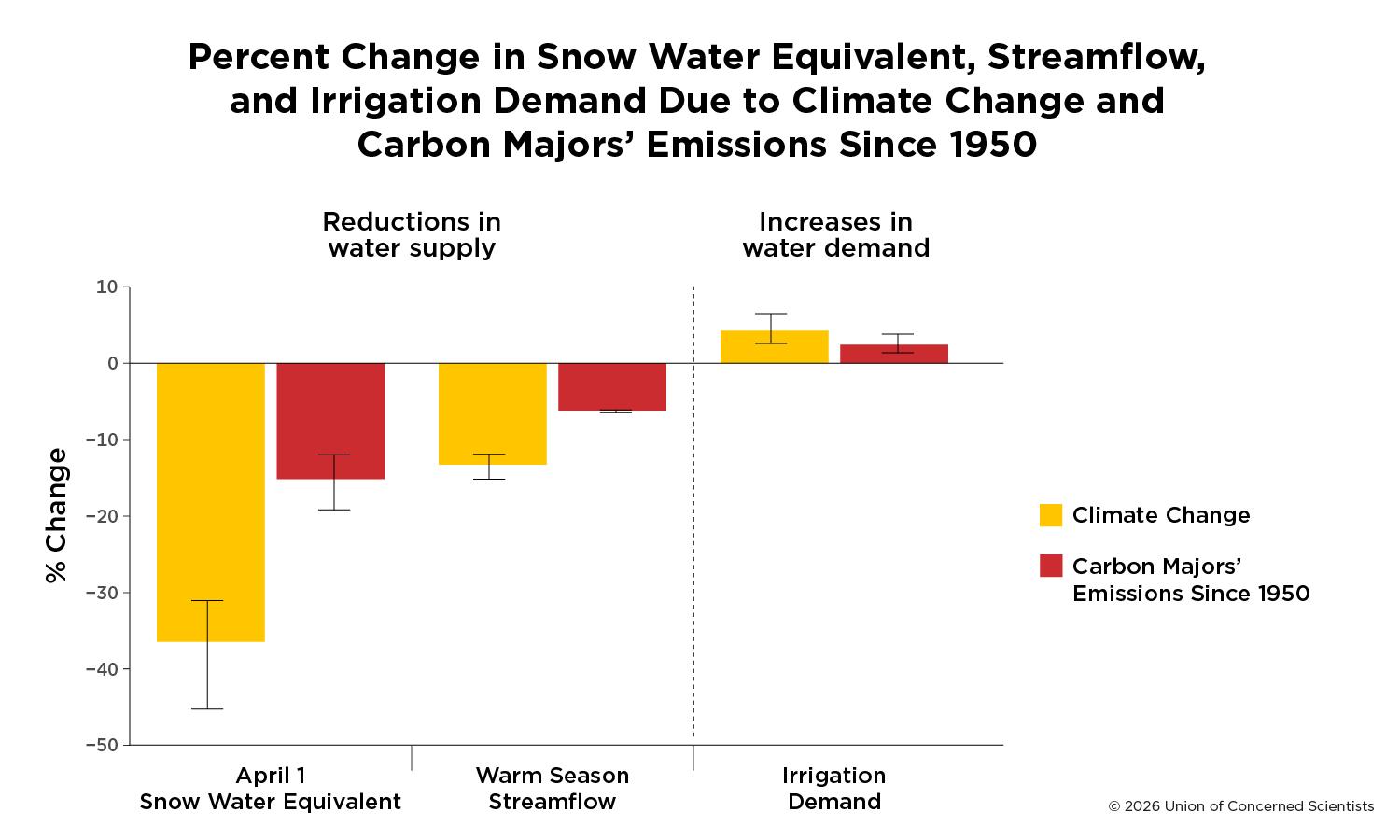
On the demand side, our results attribute an annual increase in crop irrigation demand of 720,000 acre-feet to Carbon Majors' emissions since 1950—nearly 1.6 times the amount of water used annually by the city of Los Angeles (LADWP, n.d.). Beyond changes in total volumes of water, we also find that water arrives earlier in the year. In many western river basins, the midpoint of annual streamflow now occurs roughly six days earlier than if the Carbon Majors had not released the emissions traced to these companies. In some mountainous regions, the midpoint is up to 30 days earlier, creating an even larger disconnect between periods of water availability and periods of peak demand.
In addition to broad trends across our study’s domain, this research also identified “hot spots” in the Pacific Northwest and California, where the consequences of emissions from the Carbon Majors are particularly pronounced when reduced snowpack, reduced streamflow, and increased irrigation demand are considered together. Given the agricultural importance of these hot spots, including the Middle Columbia, San Joaquin, and Sacramento Basins, our findings underscore how the consequences of the Carbon Majors’ emissions in the western United States extend beyond its geographic boundaries.
California’s Central Valley, the most productive agricultural region in the United States, illustrates how these changes cascade through local water systems, ultimately affecting the resilience of groundwater resources and communities. From 2003 to 2024, cumulative groundwater loss across the Central Valley’s three subregional basins—Sacramento River, San Joaquin River, and Tulare Lake—totaled nearly 34 million acre-feet, more than 1.5 times the volume of Oregon’s Crater Lake (Liu et al. 2022; E. L. Williams et al. 2026). Drawing on satellite data and statistical modeling, we show that nearly a fifth of this total loss can be traced to climate change, and 10 percent can be attributed to the emissions from the Carbon Majors since 1950, suggesting that reductions in streamflow and increases in irrigation demand limit natural groundwater replenishment, or recharge, and lead to increased reliance on groundwater to meet agricultural demand (E. L. Williams and Abatzoglou 2025; E. L. Williams et al. 2026). Put simply: Part of the Central Valley’s water crisis can be traced directly to the emissions of the world’s largest fossil fuel producers.
Implications
The changes in water cycle dynamics materialize across communities and ecosystems and are compounded by escalating climate impacts like drought, poor air quality, and land subsidence. Rural, agricultural, and often low-income communities bear a heavy burden, including declining water quality and dry wells that are costly to replace, if replacement is even affordable (London et al. 2018). Even when wells remain functional, lower groundwater levels require more energy to pump, resulting in higher energy costs. In community water systems, providers pass the costs of new infrastructure and additional water supplies to consumers by increasing rates and surcharges (Rachunok and Fletcher 2023). The harms also extend to Indigenous communities whose cultural and economic livelihoods depend on healthy river systems. Reduced streamflow and rising temperatures diminish salmon and other traditional resources, threatening food sovereignty and spiritual practices tied to these species (OEHHA 2025). Further, our results show an increase in cool-season streamflows, which can result in larger pulses of water and increased flood risk for downstream communities while decreasing water availability in summer months (Persad et al. 2020).
The economic consequences of climate-driven disruptions to the water cycle are profound. California’s 2020–2022 drought resulted in direct crop revenue losses of a combined $2.7 billion, with an increase of roughly 10 percent of total irrigated cropland left idle in 2021 and 2022 (Rodriguez-Flores et al. 2026). To conserve groundwater, California has invested in programs to expand nature-based solutions and repurpose previously irrigated land for multibenefit projects, fostering employment opportunities and yielding additional environmental benefits (Fernandez-Bou et al. 2023; Fernandez-Bou et al. 2025). Moreover, billions of dollars are now spent on drought response measures and emergency drinking-water programs while long-term water supply engineering infrastructure must be updated to adapt to new climatic conditions and address these compounding impacts (Ehlers 2022).
From land subsidence caused by excessive groundwater pumping to water shortages from dangerously low reservoirs and depleted aquifers, the consequences of changes to the water cycle across the western United States extend beyond agriculture, with implications for wildfire, public health, and community resilience. Increasing rates of water loss from ecosystems lead to drier vegetation and soils, which contributes to ongoing drought in the southwestern United States and elevates wildfire risk in the region’s forests (Abatzoglou and A. P. Williams 2016; A. P. Williams et al. 2020). Although unsustainable agricultural practices like excessive groundwater extraction contribute to these realities, this research highlights the reductions in water supply and increases in demand attributable to the Carbon Majors’ emissions since 1950, as well as the growing mismatch between when water is available and when it is needed for usage.
These findings add to a growing body of evidence highlighting the climate-impacting emissions traced to the largest fossil fuel companies and cement manufacturers. These impacts include sea level rise (Sadai et al. 2025), area burned in forest fires (Dahl et al. 2023), and the likelihood and severity of extreme heat waves (Quilcaille et al. 2025). While nations, high-emitting industries, and individuals have all contributed to climate change, corporate polluters, particularly those in the fossil fuel industry that deceived the public and aggressively lobbied against climate action across all levels of government, bear distinct responsibility for the harms caused by their products.
Across the world, national, local, and Tribal governments are increasingly seeking accountability through the courts (Merner et al. 2025). These include more than a dozen states—among them, California, Massachusetts, and Minnesota—suing Chevron, ExxonMobil, Shell, and other major fossil fuel companies for their decades-long campaign of deception about climate change. Cities such as Chicago and Boulder have filed lawsuits under public nuisance laws, and both San Francisco and Oakland are pursuing compensation for damages from rising sea levels. In the United States, more than 160 cases were filed in 2024 alone (Setzer and Higham 2025).
Emissions traced to the Carbon Majors are exacerbating an already unsustainable water crisis across the western United States. Although states, municipalities, and communities have, to date, borne the brunt of costs associated with adapting to this changing reality, these findings provide additional evidence that the fossil fuel industry should pay its fair share.
Methodology
This study used a combination of observational data, satellite data, and climate modeling to quantify how emissions traced to the Carbon Majors since 1950 have contributed to changes in water availability and demand across the western United States. First, we retrieved observed temperature, precipitation, relative humidity, and hydrologic data from both observational datasets and global climate models. Second, we used a reduced-complexity climate model to quantify the annual change in global mean surface temperature between 1854 and 2020 under three emissions scenarios: the first included all emissions, the second excluded all anthropogenic emissions, and the third excluded emissions traced to the Carbon Majors after 1950 (the decade when these companies began to understand the risks posed with using their products). By comparing these scenarios and using pattern scaling, we calculated how much of the observed changes in snowpack, streamflow, and irrigation demand are attributable to climate change and specifically to emissions from the Carbon Majors. Full technical details can be found in E. L. Williams et al. (2026).
The authors of this fact sheet are part of the Climate and Energy and Western States Programs at the Union of Concerned Scientists. Carly A. Phillips, PhD, is a senior research scientist; J. Pablo Ortiz-Partida, PhD, is the director of innovation and collaboration; Angel S. Fernandez-Bou, PhD, is a bilingual senior scientist; and L. Delta Merner, PhD, is the lead scientist for the Science Hub for Climate Litigation. The author team of the peer-reviewed study that is the basis for this fact sheet also includes Emily L. Williams, PhD; John T. Abatzoglou, PhD; Mohammad Safeeq, PhD; Shaina Sadai, PhD; and Oriana S. Chegwidden, PhD.
Authors
Carly A. Phillips, J. Pablo Ortiz-Partida, Angel S. Fernandez-Bou, L. Delta Merner
Acknowledgments
This project was made possible by the generous support of the Grantham Foundation for the Protection of the Environment, the Rockefeller Family Fund, and UCS members.
This report benefited from the contributions, review, and advice of many UCS colleagues, including Daela Taeoalii-Tipton, Eric Schulz, Nick Davis-Iannaco, Heather Tuttle, Pallavi Shrestha, Bryan Wadsworth, Chris Bliss, and Kathy Mulvey. We also thank Brenda Ekwurzel and Shraddhanand Shukla for their input on the peer-reviewed study.
Organizational affiliations are listed for identification purposes only. The opinions expressed herein do not necessarily reflect those of the organizations that funded the work or the individuals who informed or reviewed it. The Union of Concerned Scientists bears sole responsibility for the fact sheet’s content.
References
Abatzoglou, John T., and A. Park Williams. 2016. "Impact of Anthropogenic Climate Change on Wildfire Across Western US Forests." Proceedings of the National Academy of Sciences 113 (42): 11770--75. https://doi.org/10.1073/pnas.1607171113.
Albano, Christine M., John T. Abatzoglou, Daniel J. McEvoy, Justin L. Huntington, Charles G. Morton, Michael D. Dettinger, and Thomas J. Ott. 2022. "A Multidataset Assessment of Climatic Drivers and Uncertainties of Recent Trends in Evaporative Demand Across the Continental United States." Journal of Hydrometeorology 23 (4): 505--19. https://doi.org/10.1175/JHM-D-21-0163.1.
Dahl, Kristina A., John T. Abatzoglou, Carly A. Phillips, J. Pablo Ortiz-Partida, Rachel Licker, Delta Merner, and Brenda Ekwurzel. 2023. "Quantifying the Contribution of Major Carbon Producers to Increases in Vapor Pressure Deficit and Burned Area in Western US and Southwestern Canadian Forests." Environmental Research Letters 18 (6): 064011. https://doi.org/10.1088/1748-9326/acbce8.
Dettinger, Michael, Bradley Udall, and Aris Georgakakos. 2015. "Western Water and Climate Change." Ecological Applications 25 (8): 2069--93. https://doi.org/10.1890/15-0938.1.
Dudley, R. W., G. A. Hodgkins, M. R. McHale, M. J. Kolian, and B. Renard. 2017. "Trends in Snowmelt-Related Streamflow Timing in the Conterminous United States." Journal of Hydrology 547 (April): 208--21. https://doi.org/10.1016/j.jhydrol.2017.01.051.
Ehlers, Rachel. 2022. The 2022--23 Budget: Water and Drought Response Proposals. Legislative Analyst's Office. https://lao.ca.gov/Publications/Report/4509?utm_source.
Fernandez-Bou, Angel Santiago, J. Pablo Ortiz-Partida, Chantelise\
Pells, Leticia M. Classen-Rodriguez, Vicky Espinoza, Jose M. Rodriguez-Flores, Josué Medellin-Azuara, et al. 2021. Regional Report for the San Joaquin Valley Region on Impacts of Climate Change. SUM-CCCA4-2021-003. California Natural Resources Agency. https://www.energy.ca.gov/sites/default/files/2022-01/CA4_CCA_SJ_Region_Eng_ada.pdf.
Fernandez-Bou, Angel Santiago, José M. Rodríguez-Flores, Alexander Guzman, J. Pablo Ortiz-Partida, Leticia M. Classen-Rodriguez, Pedro A. Sánchez-Pérez, Jorge Valero-Fandiño, et al. 2023. "Water, Environment, and Socioeconomic Justice in California: A Multi-Benefit Cropland Repurposing Framework." Science of the Total Environment 858 (pt. 3): 159963. https://doi.org/10.1016/j.scitotenv.2022.159963.
Fernandez-Bou, Angel Santiago, Jose M. Rodriguez-Flores, J. Pablo Ortiz-Partida, Amanda Fencl, Leticia M. Classen-Rodriguez, Vivian Yang, Emily Williams, et al. 2025. "Cropland Repurposing as a Tool for Water Sustainability and Just Land Transition in California: Review and Best Practices." Frontiers in Water 7 (June): 1510413. https://doi.org/10.3389/frwa.2025.1510413.
Franta, Benjamin. 2018. "Early Oil Industry Knowledge of CO~2~ and Global Warming." Nature Climate Change 8 (12): 1024--25. https://doi.org/10.1038/s41558-018-0349-9.
Gottlieb, Alexander R., and Justin S. Mankin. 2024. "Evidence of Human Influence on Northern Hemisphere Snow Loss." Nature 625 (7994): 293--300. https://doi.org/10.1038/s41586-023-06794-y.
Grantham, Theodore E., and Joshua H. Viers. 2014. "100 Years of California's Water Rights System: Patterns, Trends and Uncertainty." Environmental Research Letters 9 (8): 084012. https://doi.org/10.1088/1748-9326/9/8/084012.
Heede, Richard. 2014. "Tracing Anthropogenic Carbon Dioxide and Methane Emissions to Fossil Fuel and Cement Producers, 1854--2010." Climatic Change 122 (1): 229--41. https://doi.org/10.1007/s10584-013-0986-y.
InfluenceMap. 2024. The Carbon Majors Database: Launch Report. https://carbonmajors.org/briefing/The-Carbon-Majors-Database-26913.
Jasechko, Scott, and Debra Perrone. 2020. "California's Central Valley Groundwater Wells Run Dry During Recent Drought." Earth's Future 8 (4): e2019EF001339. https://doi.org/10.1029/2019EF001339.
LADWP (Los Angeles Department of Water & Power). n.d. Who We Are: Water System. Accessed April 15, 2026. https://www.ladwp.com/who-we-are/water-system.
Li, Dongyue, Melissa L. Wrzesien, Michael Durand, Jennifer Adam, and Dennis P. Lettenmaier. 2017. "How Much Runoff Originates as Snow in the Western United States, and How Will That Change in the Future?" Geophysical Research Letters 44 (12): 6163--72. https://doi.org/10.1002/2017GL073551.
Liu, Pang-Wei, James S. Famiglietti, Adam J. Purdy, Kyra H. Adams, Avery L. McEvoy, John T Reager, Rajat Bindlish, David N. Wiese, Cédric H. David, and Matthew Rodell. 2022. "Groundwater Depletion in California's Central Valley Accelerates During Megadrought." Nature Communications 13 (1): 7825. https://doi.org/10.1038/s41467-022-35582-x.
London, Jonathan, Amanda Fencl, Sara Watterson, Jennifer Jarin, Alfonso Aranda, Aaron King, Camille Pannu, et al. 2018. The Struggle for Water Justice in California's San Joaquin Valley: A Focus on Disadvantaged Unincorporated Communities. UC Davis Center for Regional Change. https://doi.org/10.13140/RG.2.2.28367.46244.
Merner, Delta, Kathy Mulvey, Laura Peterson, and Seth Shulman. 2025. Decades of Deceit: The Case Against Major Fossil Fuel Companies for Climate Fraud and Damages. Cambridge, MA: Union of Concerned Scientists. https://doi.org/10.47923/2025.15837.
Mote, Philip W., Sihan Li, Dennis P. Lettenmaier, Mu Xiao, and Ruth Engel. 2018. "Dramatic Declines in Snowpack in the Western US." Npj Climate and Atmospheric Science 1 (1): 1--6. https://doi.org/10.1038/s41612-018-0012-1.
Moyers, Kelley, John T. Abatzoglou, Alvar Escriva-Bou, Josué Medellín-Azuara, and Joshua H. Viers. 2024. "An Invisible Water Surcharge: Climate Warming Increases Crop Water Demand in the San Joaquin Valley's Groundwater-Dependent Irrigated Agriculture." PLOS Water 3 (3): e0000184. https://doi.org/10.1371/journal.pwat.0000184.
OEHHA (Office of Environmental Health Hazard Assessment). 2025. Indicators of Climate Change: Impacts on California Tribes. https://oehha.ca.gov/climate-change/general-info/indicators-climate-change-impacts-california-tribes.
Perrone, D., and S. Jasechko. 2017. "Dry Groundwater Wells in the Western United States." Environmental Research Letters 12 (10): 104002. https://doi.org/10.1088/1748-9326/aa8ac0.
Persad, Geeta G., Daniel L. Swain, Claire Kouba, and J. Pablo Ortiz-Partida. 2020. "Inter-Model Agreement on Projected Shifts in California Hydroclimate Characteristics Critical to Water Management." Climatic Change 162 (3): 1493--1513. [https://doi.org/\
10.1007/s10584-020-02882-4](https://doi.org/10.1007/s10584-020-02882-4).
Qin, Yue, John T. Abatzoglou, Stefan Siebert, Laurie S. Huning, Amir AghaKouchak, Justin S. Mankin, Chaopeng Hong, Dan Tong, Steven J. Davis, and Nathaniel D. Mueller. 2020. "Agricultural Risks from Changing Snowmelt." Nature Climate Change 10 (5): 459--65. https://doi.org/10.1038/s41558-020-0746-8.
Quilcaille, Yann, Lukas Gudmundsson, Dominik L. Schumacher, Thomas Gasser, Richard Heede, Corina Heri, Quentin Lejeune, et al. 2025. "Systematic Attribution of Heatwaves to the Emissions of Carbon Majors." Nature 645 (8080): 392--98. https://doi.org/10.1038/s41586-025-09450-9.
Rachunok, Benjamin, and Sarah Fletcher. 2023. "Socio-Hydrological Drought Impacts on Urban Water Affordability." Nature Water 1 (1): 83--94. https://doi.org/10.1038/s44221-022-00009-w.
Rodriguez-Flores, Jose M., Spencer A. Cole, Josué Medellín-Azuara, Alvar Escriva-Bou, John T. Abatzoglou, Joshua H. Viers, Nicholas Santos, and Daniel Sumner. 2026. "Timely Drought Impact Assessment for Agriculture Using a Water-Food Systems Approach." *Environmental Research: Water *2 (2): 025006. https://doi.org/10.1088/3033-4942/ae5685.
Rodríguez-Flores, José M., Angel Santiago Fernandez-Bou, J. Pablo Ortiz-Partida, and Josué Medellín-Azuara. 2023. "Drivers of Domestic Wells Vulnerability During Droughts in California's Central Valley." Environmental Research Letters 19 (1): 014003. https://doi.org/10.1088/1748-9326/ad0d39.
Sadai, Shaina, Meghana Ranganathan, Alexander Nauels, Zebedee Nicholls, Delta Merner, Kristina Dahl, Rachel Licker, and Brenda Ekwurzel. 2025. "Estimating the Sea Level Rise Responsibility of Industrial Carbon Producers." Environmental Research Letters 20 (4): 044012. https://doi.org/10.1088/1748-9326/adb59f.
Setzer, Joana, and Catherine Higham. 2025. Global Trends in Climate Change Litigation: 2025 Snapshot. Grantham Research Institute on Climate Change and the Environment; London School of Economics and Political Science. https://doi.org/10.21953/LSE.LH46LE9Y8SGI.
Slaughter, Richard A., Alan F. Hamlet, Daniel Huppert, Joel Hamilton, and Philip W. Mote. 2010. "Mandates vs Markets: Addressing Over-Allocation of Pacific Northwest River Basins." Water Policy 12 (3): 305--17. https://doi.org/10.2166/wp.2009.152.
Wheeler, Kevin G., Brad Udall, Jian Wang, Eric Kuhn, Homa Salehabadi, and John C. Schmidt. 2022. "What Will It Take to Stabilize the Colorado River?" Science 377 (6604): 373--75. https://doi.org/10.1126/science.abo4452.
Williams, A. Park, Edward R. Cook, Jason E. Smerdon, Benjamin I. Cook, John T. Abatzoglou, Kasey Bolles, Seung H. Baek, Andrew M. Badger, and Ben Livneh. 2020. "Large Contribution from Anthropogenic Warming to an Emerging North American Megadrought." Science 368 (6488): 314--18. https://doi.org/10.1126/science.aaz9600.
Williams, Emily L., and John T. Abatzoglou. 2025. "Climate Change Increases Evaporative and Crop Irrigation Demand in North America." Earth's Future 13 (7): e2025EF005931. https://doi.org/10.1029/2025EF005931.
Williams, Emily L., John T. Abatzoglou, Carly A. Phillips, Mohammad Safeeq, Shaina Sadai, Oriana S. Chegwidden, Nathan Mueller, Angel Santiago Fernandez-Bou, L. Delta Merner, and J. Pablo Ortiz-Partida. 2026. "Carbon Emissions Exacerbating the Western US Water Crisis." Communications Earth & Environment. https://doi.org/10.1038/s43247-026-03900-6.
Womble, Philip, Steven M. Gorelick, Barton H. Thompson Jr., and J. Sebastian Hernandez-Suarez. 2025. "A Strategic Environmental Water Rights Market for Colorado River Reallocation." Nature Sustainability 8 (8): 925--35. https://doi.org/10.1038/s41893-025-01585-x.
Xiao, Mu, Bradley Udall, and Dennis P. Lettenmaier. 2018. "On the Causes of Declining Colorado River Streamflows." Water Resources Research 54 (9): 6739--56. https://doi.org/10.1029/2018WR023153.