At the end of each year, the Union of Concerned Scientists honors several individuals and groups who use science to improve the world and help people, including those who have taken a stand to protect science and scientists from political or other interference. We hope their courage, values, and compelling work will inspire you as they have inspired us.
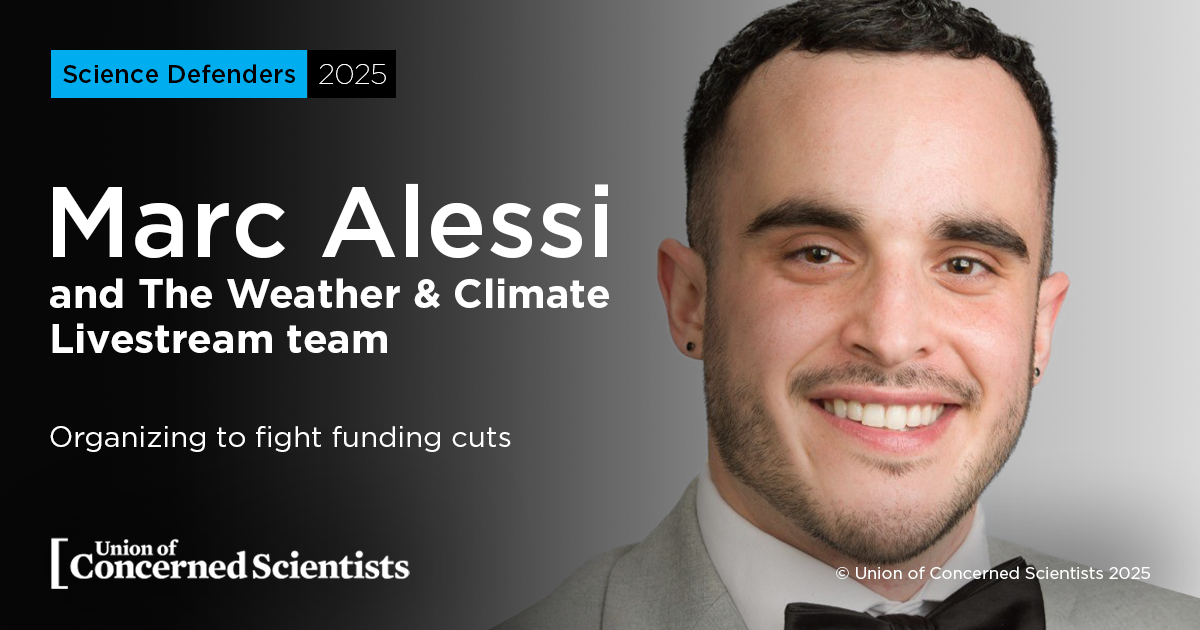
Dr. Marc Alessi and the Weather & Climate Livestream Team: Organizing Scientists to Fight Research Funding Cuts
When the media calls started to roll in, The Weather & Climate Livestream organizers knew the event was going to be huge.
“I remember getting a lot of signups immediately...there was a ton of interest. Then we started getting interview requests. I think that's when we started realizing how big it was,” says Marc Alessi. Last spring, the UCS Fellow for Climate Attribution Science helped organize a massive livestream event in which about 200 scientists presented nonstop for 100 hours to make a case for the taxpayer-funded climate and weather data, tools, and jobs that keep us safe.
The event, which drew attention to the damage the administration’s cuts to federal research at NOAA and NASA would do, lasted five days from May 28 to June 1 and was featured in The New York Times, Fast Company and other major news outlets. When the livestream wrapped, more than 180,000 viewers had tuned in to see US federally funded meteorologists and climate scientists explain how the Trump Administration’s cuts, firings, and closures threaten our ability to predict and survive wildfires, heat waves, and storms made more extreme by climate change.
It started with an idea from Marc Alessi’s friend, Jonah Bloch-Johnson, a professor at Tufts University. Soon, 14 organizers were messaging and meeting weekly to organize the marathon livestream that would show the country why the administration must be stopped from hacking away at federal agencies.
Almost every speaker highlighted how they were funded by the National Science Foundation (NSF) or NOAA, and that we would lose all of this research if it weren’t for these agencies. As a result of Alessi’s and his co-organizers’ efforts, viewers made about 15,000 calls to Congress in support of these agencies.
Alessi can’t recall a time when he wasn’t interested in weather and climate.
“I knew I wanted to go to Cornell to be in their atmospheric science program since I was in middle school,” he says. Several named storms and a high school weather camp later, he realized that dream, earning his bachelors and masters in atmospheric science at Cornell University and later earning his PhD working on climate models at Colorado State University.
In his UCS fellowship, Alessi has written influential blog posts and given interviews that have helped garner bipartisan congressional opposition to harmful Trump administration actions. As he continues this work, he’s encouraged by how unified US climate and weather scientists have become in these efforts.
“In the US, a lot of scientists are teaming up... supporting each other. Everyone is pushing back together. There’s a lot more community, and I think that’s what led to the livestream,” he notes.
Thanks to that strong network, some facing job cuts have been able to find work. “That’s how we save science in the US, and that’s really important,” he says.
Asked how regular people can be science defenders in their own lives, Alessi urges everyone to stay in the know and follow what is going on in the news, attend protests, reach out to congressional representatives and, of course, vote.
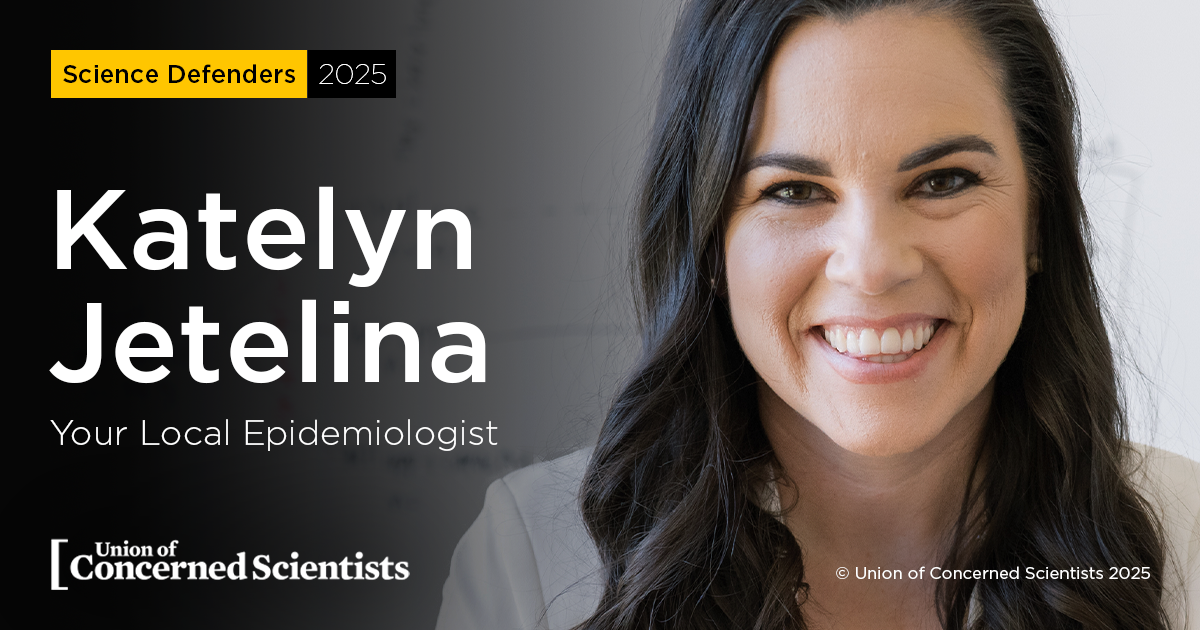
Katelyn Jetelina/Your Local Epidemiologist: Public Health Is for Everyone
Katelyn Jetelina has spent the past five-plus years bridging gaps between scientific information and public understanding. Through the newsletter and public health initiative she founded, Your Local Epidemiologist, she’s been translating science in plain language since 2020 for an ever-growing audience, so that people can make evidence-based decisions for their health. Through her consistent, easily digestible and shareable missives, Jetelina has figured out how to meet people where their attention is.
“I stumbled upon this massive gap in science communication that needs to be filled,” she says. “The information ecosystem has dramatically shifted; the top-down approach is just not how to reach people anymore.”
Your Local Epidemiologist began as a way for Jetelina to communicate vital information about COVID-19 to her students and others at the University of Texas Health Science Center, where she was teaching in March of 2020. Today, the newsletter has almost half a million subscribers in more than 130 countries, and covers topics including bird flu, disinformation, nutrition, and the spread of more familiar infectious diseases like norovirus and the common cold.
In 2025, Jetelina was invited to bridge yet another gap: between public health professionals like herself, and representatives from the Make America Healthy Again (MAHA) movement, whose members are known to reject science in favor of fringe beliefs. Over the summer, a MAHA chapter requested a meeting with Jetelina and some of her peers. In the moment, smarting from the damages inflicted to science and public health by MAHA’s figurehead, Secretary of Health and Human Services Robert F. Kennedy, Jr., Jetelina wasn’t sure if she should accept. But the opportunity for real connection intrigued her.
“I actually wanted to listen and learn from the people who reached out, and try to understand where their fears and frustrations are coming from,” she says. “It was important not to speak at, but listen to.”
This conversation turned into several more—and eventually spawned collaborative policy and research projects between MAHA members and public health experts intended to benefit the public good, built on the common ground of listening to and serving those who feel unheard and overlooked by the powerful.
If there’s a way forward from the dismantling of the federal scientific and regulatory systems intended to protect us, Jetelina believes that everyone who cares about public health—including, she says, many grassroots MAHA believers—has a role in creating something better.
“Instead of defending systems that clearly aren’t working for all, we need to try to figure out how, once all the rubble is on the floor, we can rebuild systems that are more responsive to people’s needs,” she says.
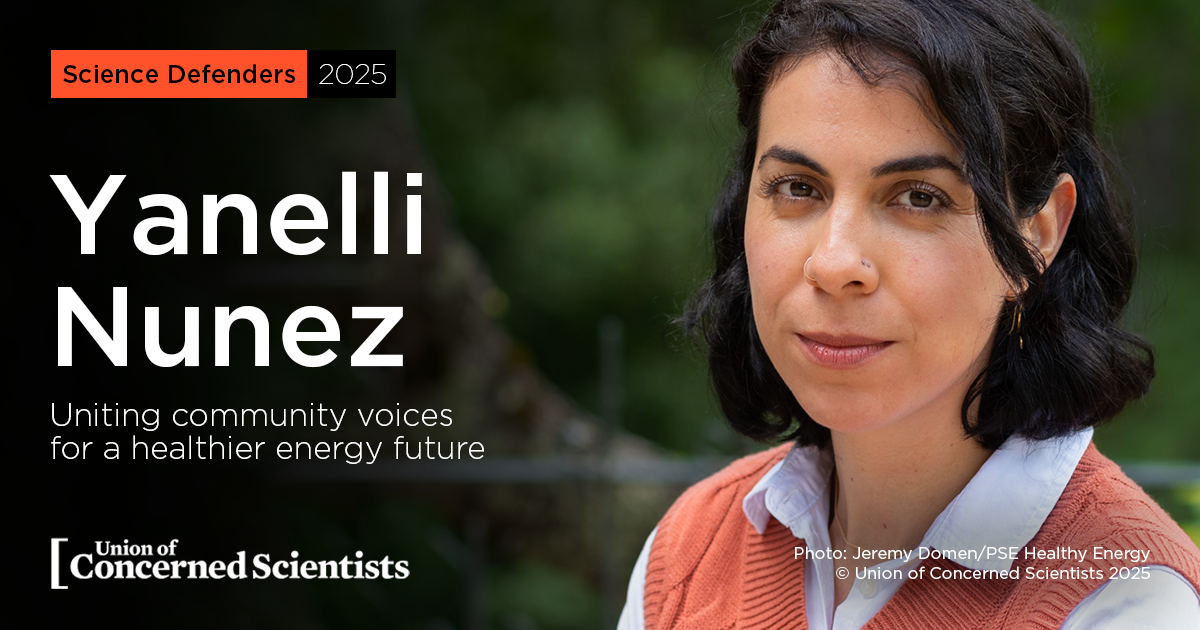
Dr. Yanelli Nunez: Unifying Community Voices for a Healthier Energy Future
As a senior scientist at PSE Healthy Energy, providing robust scientific analysis that empowers communities to make their voices heard and assert control over their health is Dr. Yanelli Nunez’s specialty.
While serving in the Peace Corps in West Africa, Dr. Nunez became increasingly aware of how our physical environment and social structures can shape our health and well-being. After earning a doctoral degree in environmental health sciences, she began focusing her research on how energy policy decisions influence public health and equity, working with communities fighting against plans to build new health-damaging fossil fuel-burning energy infrastructure.
Dr. Nunez doesn’t shy away from such daunting fights—because, to her, the outcome of the fight is only one marker of success. “This work is incremental,” she said, “and persistence is key.”
Consider a case from Wisconsin earlier this year, when a utility company proposed building two new gas plants in the backyards of thousands of people’s homes. Dr. Nunez worked in coalition with UCS, advocacy group Healthy Climate Wisconsin, and local families to highlight the harmful health impacts of dependence on fossil fuels—especially when committing to this toxic fuel source for decades to come. Her research quantified that toll: over $5.7 billion in health impacts over the lifetime of these plants, largely due to premature morbidity.
This data was brought to the table, forcing the utility company to reckon with the devastating health impacts of choosing fossil fuels over renewables. So many families were engaged in the process to voice their outrage that additional days of public comment were added to the calendar. The utility company was put on the defensive, and using science and data, Dr. Nunez defended the community’s priority of protecting public health against profit-driven corporations.
Dr. Nunez’s work is credited by members of the coalition for building significant momentum in community organizing efforts against energy policies harmful to public health, like this one. Although the utility company decided to move forward with the plan, the landscape has shifted for their future proposals. "We brought the topic of public health to the front row,” said Dr Nunez. And now that the community has fought their way into a seat at the decision table, they’re focused on winning even more.
Dr. Nunez is now working with state electricity commissions to incorporate public health accounting into energy resource modeling, ensuring that the financial benefits of renewables toward public health—and the cost of fossil fuels—are taken into account. And she’s staying involved in local advocacy.
“The most joyful part of this work is collaboration with community-based organizations,” she says. “Their dedication and passion is so inspiring and motivating.”
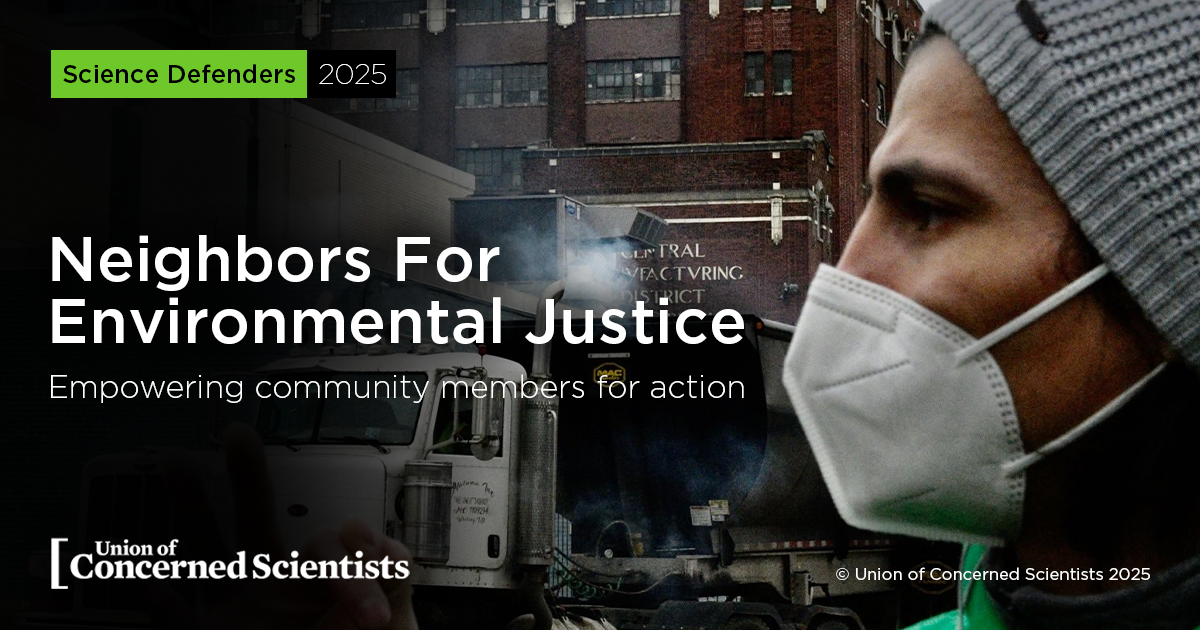
Neighbors for Environmental Justice: Empowering Community Members for Action and Advocacy
McKinley Park in Chicago’s Southwest Side is a welcome green space. On a recent autumn morning, people were out exercising and walking their dogs while on park benches, retirees caught up with friends beneath the cool canopy of trees. At first glance, you would never know that the surrounding neighborhood is plagued with unhealthy levels of air pollution. But stay long enough and the toxic tailpipe exhaust from the hundreds of big rigs that pass through on their way to nearby warehouses along with the foul odors from a nearby asphalt mixing facility will make your eyes burn and your head hurt.
Neighbors for Environmental Justice (N4EJ) began to coalesce when that asphalt facility, MAT Asphalt, abruptly appeared in the neighborhood one day in 2018. They set out to make sense of why industry seemed more important than the health of marginalized people and how they could address the public health harms that so many of their friends, family, and neighbors were experiencing. Through many community engagement events, N4EJ began to spread awareness to community members about air quality and environmental justice. This year, it pumped up its community engagement by hosting more than 30 events. N4EJ made progress on air quality data collection by installing 10 new neighborhood-level air monitors and was a community partner in the development of a new city-wide air monitoring network created by the University of Illinois Chicago and the city of Chicago, which is now the largest network in the US. N4EJ also launched a tri-lingual web app (ChicagoAQI) that allows residents to suggest placement of future air monitors and explore data sets related to local environmental justice issues. This data collection and community education is a critical undertaking given the City’s notable gaps in air monitoring resources and because the particulate matter levels are elevated compared to other areas of Chicago. Although the data itself won’t improve pollution levels or health outcomes, it will empower folks to speak up, participate in local politics, and advocate for increased protections from pollution hotspots.
Another part of addressing this issue is understanding its complexity. In McKinley Park, the pollution stems from many sources: the asphalt plant, heavy traffic, trucks enroute to the many warehouses surrounding the area, and other production facility emissions. Given this, N4EJ is actively working to establish an ordinance in Chicago that addresses cumulative impacts, the scientific principle that exposures to multiple pollutants from multiple sources accumulate over time. Many scientists have found that doses of multiple chemicals can have different and sometimes greater adverse impacts than doses of individual chemicals alone, and that cumulative impacts analysis is a holistic—and more realistic—way of looking at human health and potential threats to it. The Hazel M. Johnson Cumulative Impacts Ordinance (HMJ CIO) aims to protect communities from being further impacted by neighboring heavy polluters by putting up safeguards for these communities and reminding the city and developers that they matter too. Through the HMJ CIO, which honors the legacy of Hazel M. Johnson, the “Mother of Environmental Justice,” N4EJ and its fellow community-based organizations are looking to keep up the fight for frontline communities as Hazel did by changing the broken patterns of racist zoning practices and subsequent sacrifice zone creation in Chicago.