Update (11/25): An update of this analysis is available here
Passenger cars and trucks are one of the largest sources of global warming emissions in the United States.
Electric vehicles (EVs) have the potential to dramatically reduce these emissions, especially when charged by low-carbon renewable electricity.
New UCS analysis finds that over its lifetime—from manufacturing to operation to disposal—the average new battery electric vehicle produces roughly half the global warming pollution than a comparable gasoline or diesel vehicle. Based on the most recently available data on power plant emissions and EV sales, driving the average EV in the United States produces global warming emissions equal to a gasoline vehicle that gets 91 miles per gallon.
To speed climate benefits and to encourage more drivers to choose electric vehicles, the report recommends policy changes and investments to bring even more renewable energy onto the grid, develop robust battery recycling programs to help reduce manufacturing impacts, and make EVs more accessible and affordable.
On this topic
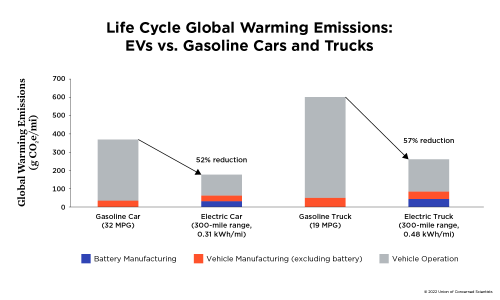
Life Cycle Global Warming Emissions: EVs vs. Gasoline Cars and Trucks
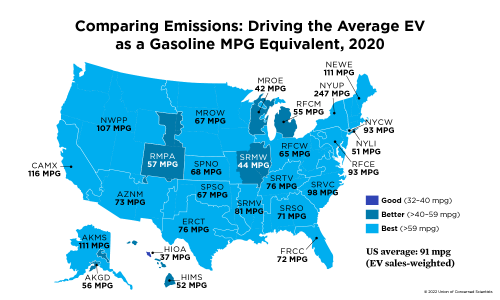
Map Comparing MPGs of EVs vs. regular car

EV Emissions Tool
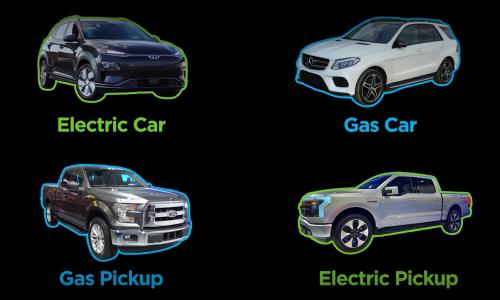
Electric Vehicles are Cleaner
Downloads
Citation
Reichmuth, Dave, Jessica Dunn, and Don Anair. 2022. Driving Cleaner: Electric Cars and Pickups Beat Gasoline on Lifetime Global Warming Emissions. Cambridge, MA: Union of Concerned Scientists.
https://www.ucsusa.org/resources/driving-cleaner
Related resources

UCS vs Anti-Science Actions
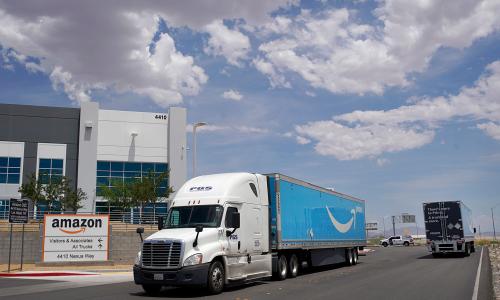
Addressing Freight Pollution at the Source
Self-Driving Cars 101