A legacy of systemic racial discrimination has left environmental justice communities in the Kansas City area disproportionately exposed to multiple health-damaging pollutants. As a result, environmental justice advocates have taken on the much-needed work of pollution monitoring and raising community awareness to protect their own health.
This report, a collaboration between the Center for Science and Democracy at UCS and the Kansas City-based organization CleanAirNow, shows that communities of color and low-income communities in Kansas City face a greater risk of exposure to environmental hazards, including cumulative exposures to hazardous pollutants from heavy freight and diesel-powered transportation as well as from industrial emissions. These hazards are associated with myriad negative health outcomes including cancer, respiratory illness, and shorter life expectancy.
The local environmental justice movement has been working to address these inequities by establishing an air monitoring network that provides real-time, local data that people can use to advocate for science-based protections. In bringing these issues to light, we call upon local, state, and federal decisionmakers to recognize industry's environmental impacts throughout the city, to engage the community in decisionmaking, and to address systemic environmental justice concerns in Kansas City and across the country.
On this topic
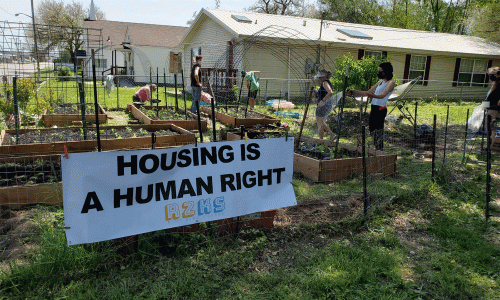
CleanAirNow Envisions a More Equitable and Just Future
Why Utility Planning Must Be Inclusive
Downloads
Citation
Reed, Genna, Beto Lugo-Martinez, and Casey Kalman. 2021. Environmental Racism in the Heartland: Fighting for Equity and Health in Kansas City. Cambridge, MA: Union of Concerned Scientists.
https://doi.org/10.47923/2021.14322
Related resources
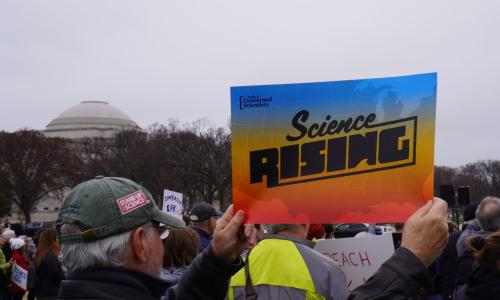
Advocating for Science During the August 2026 Congressional Recess

UCS vs Anti-Science Actions
Attacks on Science